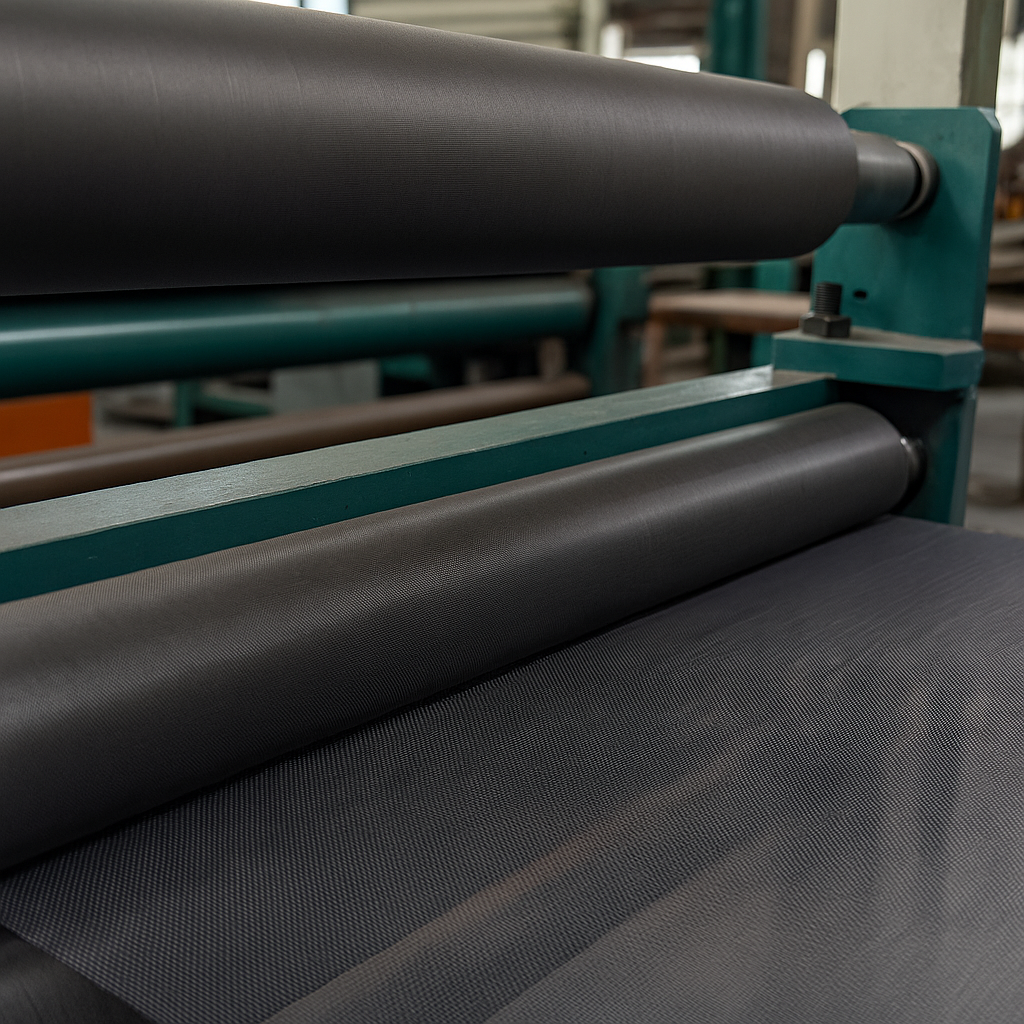
In the screening industry, uneven holes and slanted mesh are common technical challenges. At JI'AN MESH, we believe in "Prevention > Process Control > After-sales Responsibility." Here is a deep dive into the causes and our solutions.
1. Primary Causes of Uneven Holes
A. Weft Wire Replacement Misalignment
The process of re-threading after a weft wire ends is critical. If the wire isn't positioned correctly upon restart, it creates positional misalignment defects (large/small holes).
B. Insufficient Surface Tension
Aging tension systems or mismatched warp/weft wires allow weft wires to rebound, leading to inconsistent mesh apertures and affecting overall flatness.
2. Why Does "Slanted Mesh" Occur?
Slanting is usually tied to uneven tension during the coating process. When the pull is unbalanced during high-temperature curing, the mesh undergoes directional deformation or grid misalignment.
3. Industry Reality: Limits of Manual Inspection
Manual backlight inspection is the industry standard. However, inspecting ~5,000 meters daily leads to visual fatigue, making it difficult to capture 100% of micro-defects. This is why we prioritize a responsible after-sales attitude.
4. Our Strategy: Stricter Control & Responsibility
Stable Sourcing: Selecting premium weft wires to reduce machine downtime.
System Maintenance: Regular calibration of tension controls for precise wire matching.
Process Upgrades: Enhanced coating rails and tension calibration to prevent slanting.
Magnified Inspection: Brighter lighting and magnification tools to improve defect detection.
Comprehensive After-sales Warranty
We stand by our quality. For any missed defects, we offer length deductions, replacements, or technical advice to minimize installation waste. Your trust is our long-term commitment.